
CO-PRODUCED BY ADMAF, MUSEO UNIVERSIDAD DE NAVARRA & KHAWLA ART & CULTURE
WORLD PREMIERE
OVERVIEW
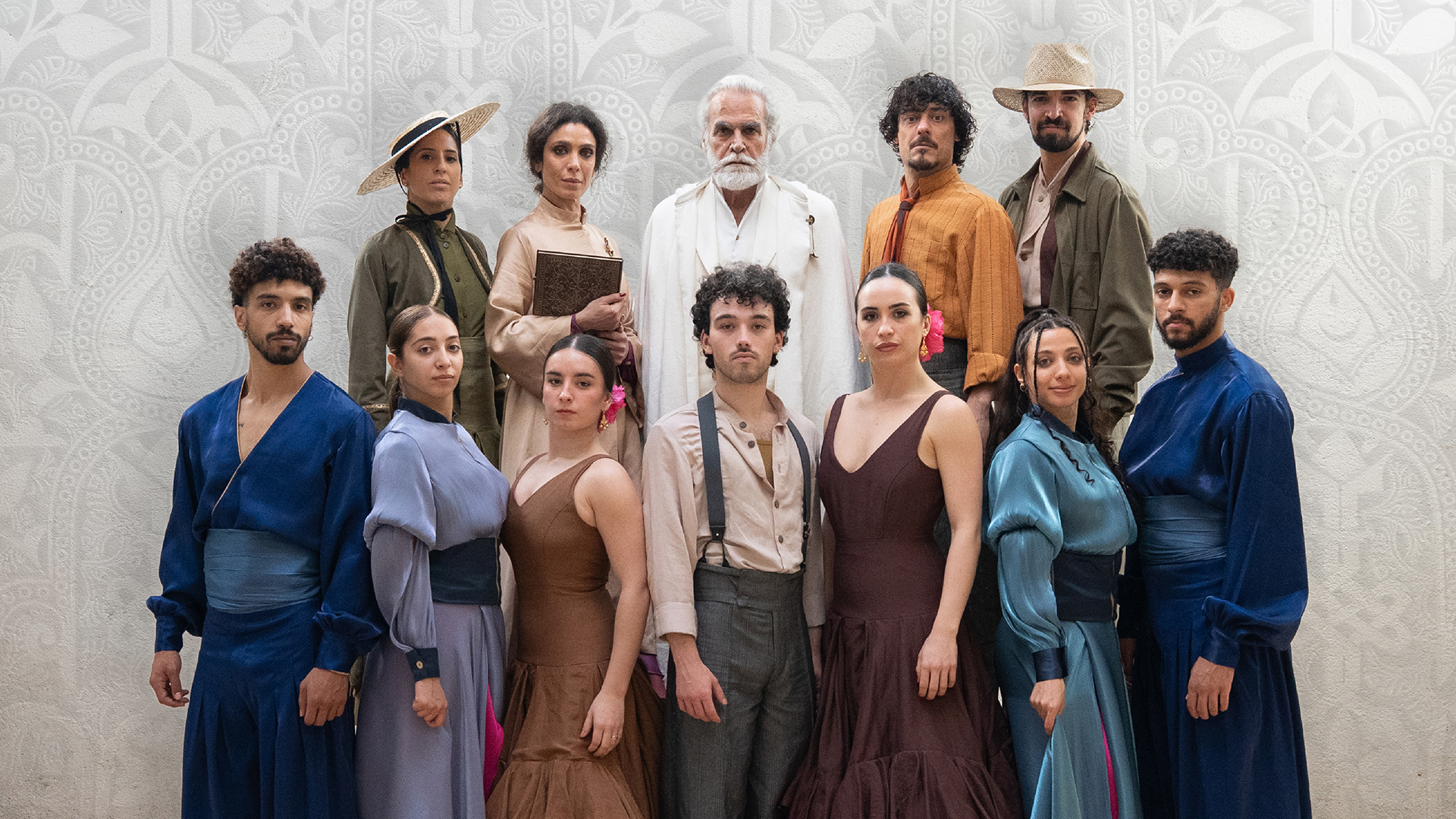
A groundbreaking interdisciplinary theatre production that bridges the worlds of Spanish flamenco and Arab poetic tradition in a celebration of shared heritage, cultural dialogue and contemporary artistic fusion. In a powerful collaboration between Spanish and Arab institutions, this production brings together celebrated Spanish stars and prominent Arab actors and vocalists in a visually rich and emotionally stirring narrative.
Set in an enchanting Andalusian garden, the story follows a curious Arab girl on a journey to study the ancient botanical theory of flowers. There, she encounters a passionate Spanish florist, who enters the garden each morning to cut flowers for the market. What begins as a clash between theory and practice, between preservation and commerce unfolds through dynamic flamenco and classical Arab dance, woven with poetry in both languages.
As their journey evolves, the characters uncover deep-rooted cultural connections between their worlds, culminating in a powerful reconciliation under the symbolic bloom of the Algarabía flower _ a poetic metaphor for harmony, humility, history and mutual understanding. Algarabía is more than a performance; it is a living dialogue between two legacies that once coexisted in Al-Andalus, now reimagined on stage through rhythm, movement and verse
PROGRAMME
Overture
Music: Josema García Hormigo
I. Prelude
Music: Ihab Darwish (Chords of Reverie 1 – Granada – Chords of Reverie 2)
Arrangement: Josema García Hormigo
Texts: Nizar Qabbani
II. Encounter
Music: Manuel Masaedo; Ihab Darwish (Chords of Reverie 3 & 4); Manuel de Falla (Spanish Dance from La vida breve, Distant Dance from Noches en los jardines de España)
Arrangement: Josema García Hormigo
Texts: Miguel Hernández (Azahar), Ibn Zamrak
III. Conversation
Music: Manuel Masaedo
Arrangement: Josema García Hormigo
Texts: Saint John of the Cross (Song of the Soul – Though it is Night)
IV. Dispute and Struggle
Music: Manuel de Falla (Ritual Fire Dance and Magic Circle from El amor brujo);
Josema García Hormigo (Fight)
V. Reflection
Music: Josema García Hormigo (Farah); Manuel Masaedo & Josema García Hormigo (dance solo); Traditional (Lamma Bada Yatathanna)
Arrangement: Josema García Hormigo
Texts: Traditional (Lamma Bada Yatathanna)
VI. Reconciliation
Music: Manuel de Falla (In the Generalife from Noches en los jardines de España);
Ihab Darwish (Hekayat)
Arrangement: Josema García Hormigo (Hekayat)
VIII. Final Dance
Music: Manuel Masaedo (flamenco solo); Manuel de Falla (Final Dance – Jota from El sombrero de tres picos)
ARTISTS
Orquesta Sinfónica Universidad de Navarra
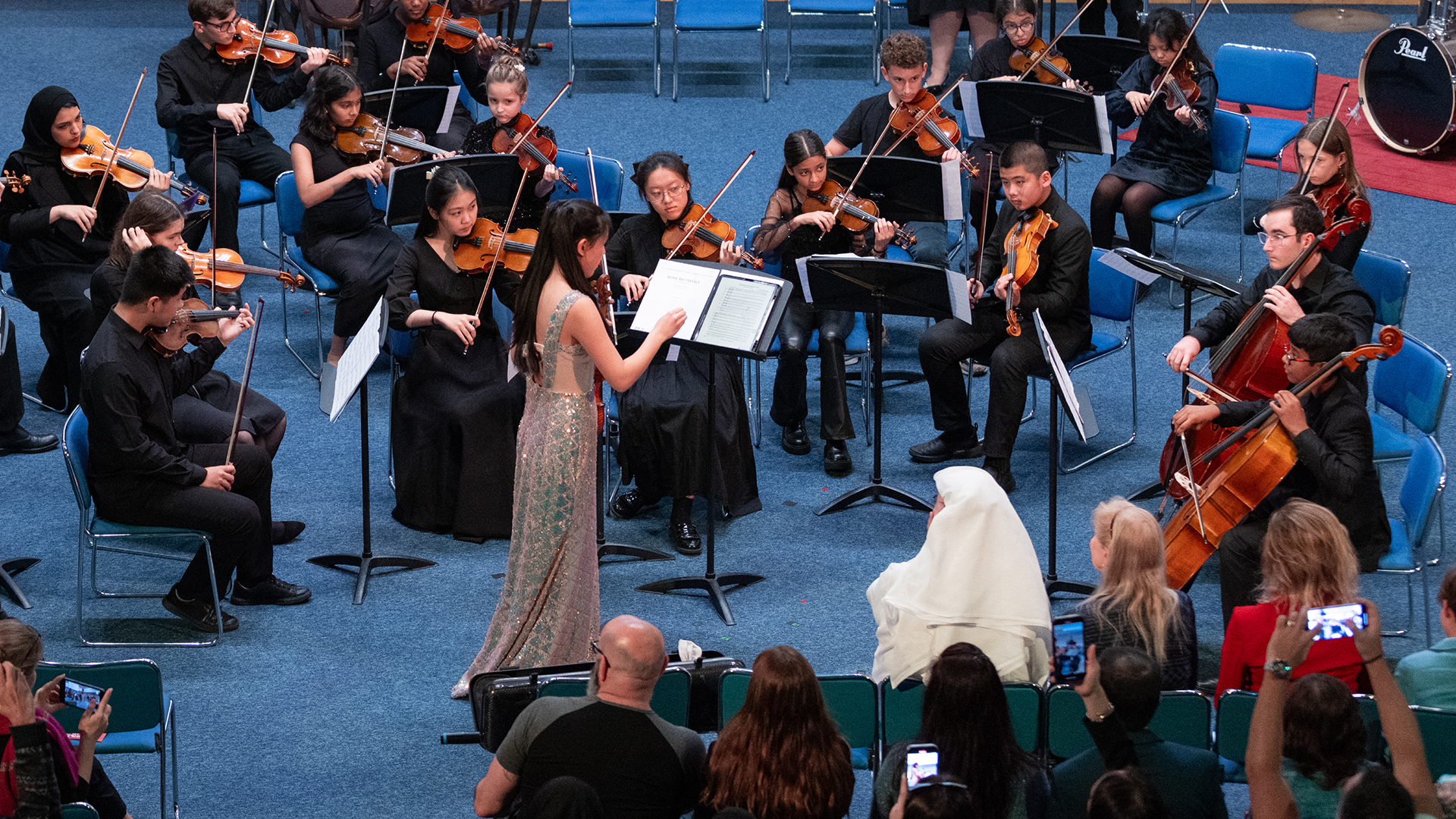
A student ensemble based in Pamplona, Spain, the orchestra comprises university-aged musicians and offers students the opportunity to enhance their musical skills within a high-quality symphonic setting. Under the guidance of esteemed professionals, the orchestra prepares and performs a diverse repertoire, often collaborating with renowned soloists and conductors. Throughout the academic year, the orchestra engages in regular rehearsals that culminate in public performances, showcasing the talents and dedication of its members. These concerts are held at various venues, including the Museum of the University of Navarra (MUN), providing a platform for students to present their work to the public.
In addition to its musical endeavours, the orchestra is a part of the university’s Artistic Talent Programme, allowing students to earn academic credits while pursuing their passion for music. This initiative facilitates the balance between academic commitments and artistic pursuits, enriching the cultural life of the university community.
Borja Quintas
The conductor Borja Quintas has performed in most European capitals and in the Middle East, in countries including Georgia, Azerbaijan and Kyrgyzstan, conducting some of the world’s finest orchestras, including the London Symphony Orchestra and the New Russia Symphony Orchestra.
With scholarships from various organisations, including the Barrié de la Maza Foundation, he studied conducting at the Moscow Tchaikovsky Conservatory under Professor Vladimir Ponkin, earning the Red Diploma of Excellence, a distinction awarded to graduates with the highest academic performance.
He has always combined the symphonic and lyrical worlds, cultivating different genres such as theatre, flamenco, sacred drama and audiovisual media. He has collaborated with artists as diverse as Roque Baños, Kuzma Bodrov, Dmitry Krymov, Lucas Vidal, Lucero Tena, Valery Sokolov and Ara Malikian, and has worked with singers including Plácido Domingo, Javier Camarena, María Bayo and Ainhoa Arteta, among many others. He has also immersed himself significantly in 20th and 21st-century music, recording for labels such as Naxos.
Strongly committed to young symphonic ensembles as a driving force of art and social change, he is currently the artistic director of the JMJ Symphony Orchestra, Choir and Children’s Choir, the University of Navarra Symphony Orchestra, the CSMA Symphony and Philharmonic Orchestras and the UCAM Symphony Orchestra.
Quintas also teaches orchestral conducting at the Aragon Conservatory of Music and is academic director of the Katarina Gurska Higher School’s Master in Conducting programme. He was recently invited to serve as a jury member at the Second Sergei Rachmaninov International Conducting, Composition and Piano Competition in Moscow.
Jesús Carmona
Jesús Carmona was born in Barcelona in 1985. He is a dancer and choreographer, and one of today’s most internationally recognised figures in Spanish dance and flamenco. A graduate of the Institut del Teatre, he joined the Ballet Nacional de España becoming principal dancer in 2007.
After leaving the company, Carmona developed a celebrated career creating works such as Ímpetus, Baile de Bestias (Max Awards 2022) and Súper-Viviente. In 2023, he founded the Ballet Español of the Community of Madrid and successfully launched its first season at Teatros del Canal.
He has performed at top venues such as Sadler’s Wells, Lincoln Center and the Bolshoi Theatre, and has been honoured with major awards, including the Spanish National Dance Prize (2020), the Benois de la Danse (2021) and the Ojo Crítico Award (2019). His work blends technical mastery with a contemporary, emotionally resonant vision of flamenco and Spanish dance.
Experience Algarabía in Abu Dhabi on 26 November 2026, presented as part of Abu Dhabi Festival’s Headline Programme.
Performers:
Jesús Carmona (Florencio)
Cynthya Karam (Farah)
Rafic Ali Ahmad (Spirit of the Garden)
Lucía Campillo (Candela)
Music
Universidad de Navarra Symphony Orchestra and Choir
Manuel Masaedo (flamenco percussion)
Antonio González Reyes (flamenco guitar)
Belén Vega (flamenco singing)
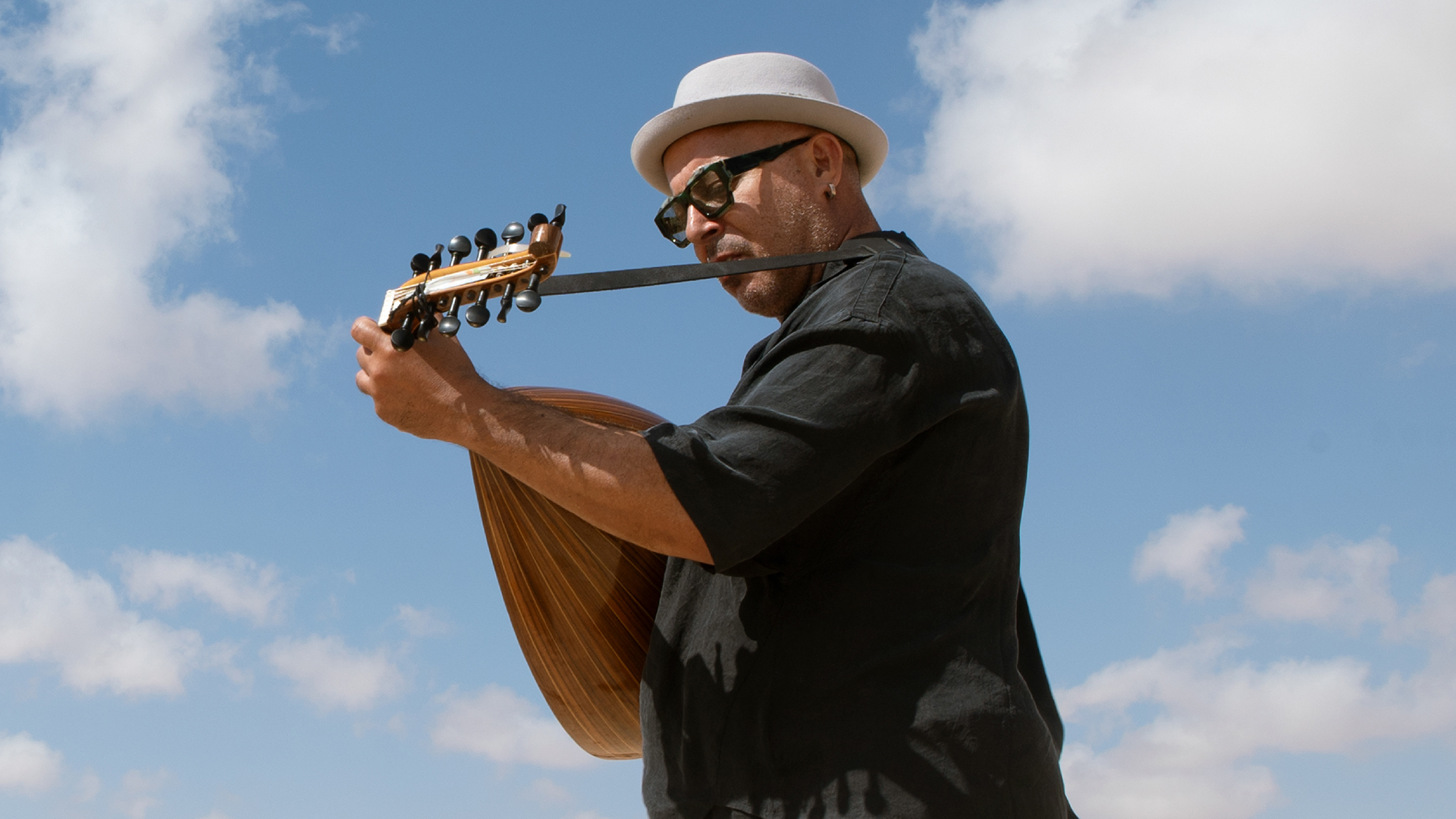
Aya El Dika Mawla (oud – Arabic lute)
Dance
Aitana Rousseau
Sofía Lasheras
Pablo Egea
Juan Bravo
Four dancers from Sharjah Performing Arts Academy:
Aya Ahmad Izzat Al Kanawati
Kiroules Malak Mounir Boushra
Noran Ayman Mahmoud Abdelhamed Gebril
Youssef Moujab
Extras
Students from the Theatre Training Program of the University of Navarra
Dramaturgy: Ignacio García, Jihad Mikhael
Choreography: Jesús Carmona
Music and arrangements: Josema García Hormigo
Flamenco music: Manuel Masaedo
Includes music by Manuel de Falla and Ihab Darwish
Set and props design: Liuba Cid
Costume design: Yaiza Pinillos
Lighting design: Juanjo Llorens
Audiovisual design: Alejandro Contreras
Pictorial intervention: Carlos Bernar
Costume assistant: Saúl López Mainar
Tailoring workshop: Gabriel Besa, Jota Studio
All designs have been developed in collaboration with students and faculty of the University of Navarra.

.png)
.png)


.png)











.png)
.png)


.png)