PROXIMITIES
Seoul Museum of Art
6 December 2025 – 29 March 2026
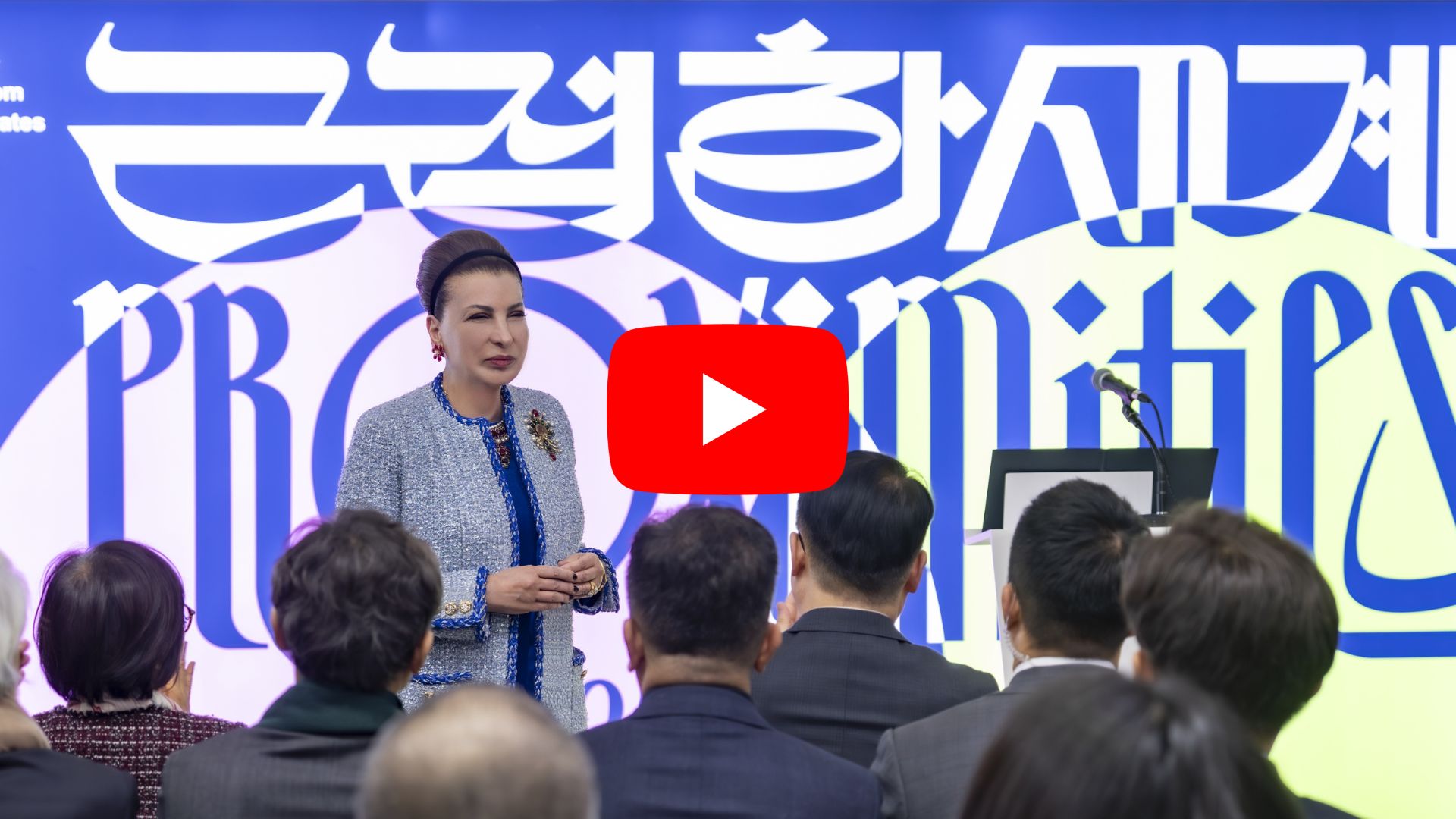
The milestone exhibition Proximities introduced more than forty artists across three generations connected to the United Arab Emirates, a Gulf nation shaped by migration, abundant natural resources and rapid urban transformation over the past half century since its founding. The exhibition consisted of three sections developed through collaboration with artists and curators, exploring phenomena that arise when unstable and subjective worlds at personal, social, and urban levels come into contact. Expanding from the most intimate and imaginative realms to geopolitical and foundational dimensions, the exhibition asks how relationships can remain close without collapsing into sameness.
Video Credit: Ouloum El Dar, Abu Dhabi Media.
Public Programme Layered DiaLogues
Panel discussion: Space as medium - In/Visible City
The city in the city: what lies beneath and within the visible urban environment? This panel unearths the hidden infrastructures – both material and social – that orchestrate urban life and social relations. Moving beyond visible architectural forms, participants consider how infrastructure operates as both geopolitical script and social choreography, examining how these systems emerge from, and reinforce, particular forms of social organisation. Conceiving the city as a layered topography of speculative, real, and imagined mediums, ranging from master plans to maintenance routines, the discussion focuses on Gulf urbanism and the cultural logic embedded in its invisible systems.
The Panel:
Minouk Lim - Artist
Wael Al Awar - Principal Architect / Founding Partner waiwai
Moderator:
Salem AlSuwaidi - Writer and curator
Curatorial discussion: Layered Medium: We Are in Open Circuits
Kyung-hwan Yeo, Co-curator
Maya El Khalil, Co-curator
Byungjun Kwon, artist
Choi Goen, artist
Panel Discussion: Exhibition Design as Medium
Talk: Chris Dercon in conversation with co-curators Kyung-hwan Yeo & Maya El Khalil
Film screening: Nam June Paik: Moon Is The Oldest TV, 2023
Panel discussion: Body as medium InterFACES: Skin/Screen
What if we understood the virtual and the physical as a continuum? This panel discussion explores how interfaces - from skin to canvas to screen - mediate sensory experiences and shape our relation to the world. The body, as the seat of emotion and our most primal tool for communication, is often seen as the closest link to the self whereas virtual boundaries are regarded as disembodied surfaces and sites of projection. Yet, as movements are translated into mediated forms, and digital affects are assimilated into involuntary gestures, how to we distinguish between physical and virtual? From body to image, artists have long treated surfaces as interfaces for expression and interaction. Whether through painting, performance, or pixels, they engage with questions of presence, bodily depiction, and self-representation. Bringing together diverse practitioners, this panel considers how our current era of hyperconnectivity has intensified and accelerated the porosity between these sites of encounter, destabilising the limits of the body and challenging our understanding of presence, identity and self.
Panel discussion: Society as medium - Objects as Anchors: Material, Narrative, and Memory
Objects persist across time and space, becoming focal points around which communities, identities, and histories take shape. From traditional crafts and ritual items to incidental domestic bric-a-brac, objects can anchor deeply personal or collective narratives. Though objects are perceived as immutable, static and fixed, their stories never are. When gravitating around artefacts, culture is felt in material, tangible ways, yet generations and geographies will understand the same object differently. This subjective interdependence of material, memory, and narrative means that, while objects might travel, their precise meanings do not always move with them: what is sincerely felt in one place or time does not necessarily translate.
The Panel:
Rand Abdul Jabbar - Artist
Sojung Jun - Artist
Moderator:
Tina Sherwell - Co-Director of Masters of Fine Arts in Art and Media; Associate Arts Professor, New York University Abu Dhabi
CURATORIAL STATEMENT
Seoul Museum of Art and Abu Dhabi Music & Arts Foundation present Proximities, spotlighting contemporary art from the United Arab Emirates.
Proximities features more than 40 UAE-based artists, including 33 Emiratis, across three generations – a Gulf nation shaped by the convergences of migration, natural abundance, and rapid urban transformation since its foundation half a century ago. Through three sections, collaboratively developed with artist-curators, the exhibition explores what happens when unstable and subjective worlds – personal, social, urban – come into contact. Scaling from the domestic and imaginary to the geopolitical and the elemental, the artists and curators ask how we can exist in nearness without collapsing into sameness.
In today’s interconnected world, we are configured into proximities that exceed what geography can map. In the immediacy and closeness offered by globalisation, artists work with inherited forms and circulating materials. Between the regionally specific and the internationally legible, this tripartite exhibition considers how ideas evolve through movement and translation – colliding and synthesising views. The three sections propose distinct ways of encountering and seeing: the artist-curators were invited to respond to themes that resonate with their practice; collaborating with curators Maya El Khalil and Eunju Kim, they gathered peers together to develop positions that articulate ways of encountering the world. Additional works gravitate around each section, creating routes between the artists’ perspectives. These connecting sections become productive intervals where different approaches to cultural navigation emerge.
Anchored with a section proposed by photographer Farah Al Qasimi, A Place for Turning is where the familiar and the strange merge. Domestic life unfolds behind walls, creating concurrent realities we cannot see. Imagination sustains interior realms, nurturing new modes and affinities that might meet a changing world. Moving outwards into social orders, Recording Distance, Not Topography, conceived by Mohammed Kazem and Cristiana de Marchi, reckons with spatial relations in flux. Though maps, coordinates, borders, and compasses inscribe power, here, they become unstable, breaking free to diagram alternative formations. Sustaining this mutability, That Thing, Amphibian is a return to the elemental and an evolution into hybridity. The artist trio Ramin Haerizadeh, Rokni Haerizadeh and Hesam Rahmanian have organised their collaborations into a structure that comes from the Chinese/Korean character 回 – a square within a square – evoking return, containment, and the interplay of inside and outside. Artists become ‘amphibians of meaning’ as they live simultaneously in two environments.
Each area of focus proposes a different mode of encounter – everyday fabulation, mapping flux, and amphibious states of reciprocity. These three propositional positions form a constellation rather than separate categories, their ideas flowing between and connecting approaches.
The Curators

Maya El Khalil
She co-curated Manal Al Dowayan: Shifting Sands for the Saudi Pavilion at the Venice Biennale 2024; In the Presence of Absence, Desert X Al Ula 2024; and curated Transparencies for Art Here 2023 at Louvre Abu Dhabi. In 2022, she curated ADMAF’s Portrait of a Nation: Beyond Narratives.
Her recent research addresses environmental and climate challenges through multidisciplinary programmes such as I Love You, Urgently (21,39 Jeddah Arts, 2020), the digital platform Take Me to the River(2020–21), and Perceptible Rhythms / Alternative Temporalities (2022).
As founding director of Athr Gallery(2009–2016), she played a key role in developing the Saudi contemporary art scene. El Khalil regularly serves on panels and advisory boards including the Prince Claus Fund and is currently Visual Arts Advisor to ADMAF.
Eunju Kim
She is particularly drawn to curating exhibitions that stimulate senses beyond the everyday, enabling multidimensional expansions of depth. Major exhibitions she has curated include MMCA Lee Kun-hee Collection: Masterpieces of Korean Art (MMCA, 2021), My Your Memory (MMCA, 2022), Film_Text and Image (MMCA, 2023), and Jungki Beak’s is of (Arario Museum, 2025).
Artists
Abdul Qader Al Rais
Abdullah Al Saadi
Alaa Edris
Ala Younis
Aliyah Al Awadhi
Almaha Jaralla
Ammar Al Attar
Afra Al Dhaheri
Ayesha Hadhir
Ayman Zedani
Cristiana De Marchi
Ebtisam Abdulaziz
Farah Al Qasimi
Fatma Al Ali
Hazem Harb
Hassan Sharif
Hussein Sharif
Jumairy
Khalid Seddiq
Kholoud Sharafi
Layan Attari
Maitha Abdalla
Maitha Al Omaira
Maitha Ali
Mohamed Al Mazrouei
Mohammed Ahmed Ibrahim
Mohammed Kazem
Moza Almatrooshi
Najat Makki
Nujoom Al Ghanem
Rajaa Khalid
Ramin Haerizadeh
Rokni Haerizadeh
Hesam Rahmanian
Rand Abdul Jabbar
Rashed Qurwash
Rawdha Al Ketbi
Rayan Al Jneibi
Sara Al Haddad
Shaikha Al Ketbi
Shaikha Al Mazrou
Shamma Al Amri
Shamma Al Bastaki
Tarek Al-Ghoussein
Tarek ElKassouf
Vikram Divecha
Vivek Vilasini
PROXIMITIES:
Public Programme
COMMENTARY
The Infinite PossibilIties of a Turning Heart
Where survival demands movement, and transformation begins from within
MAR 31, 2026
Proximities: Contemporary Art from the United Arab Emirates was the second exhibition in a multi-year collaboration between Abu Dhabi Music & Arts Foundation and Seoul Museum of Art. At its close, I travelled to Seoul and found myself reflecting on the questions it raised about art’s transformative potential.
.jpg)
In Arabic, the root of the word for heart (qalb) comes from qalaba: to turn, to reverse, or to change. Through that frame of reference, the organ becomes more than a vessel that circulates blood; it becomes a site of transformation with its very etymology implying fluctuation and constant motion.
This metaphor offers an entry point into Proximities: Contemporary Art from the United Arab Emirates, an institutional exhibition presented by Abu Dhabi Music & Arts Foundation (ADMAF) of more than 100 works by 47 UAE-based artists at the Seoul Museum of Art (SeMA).
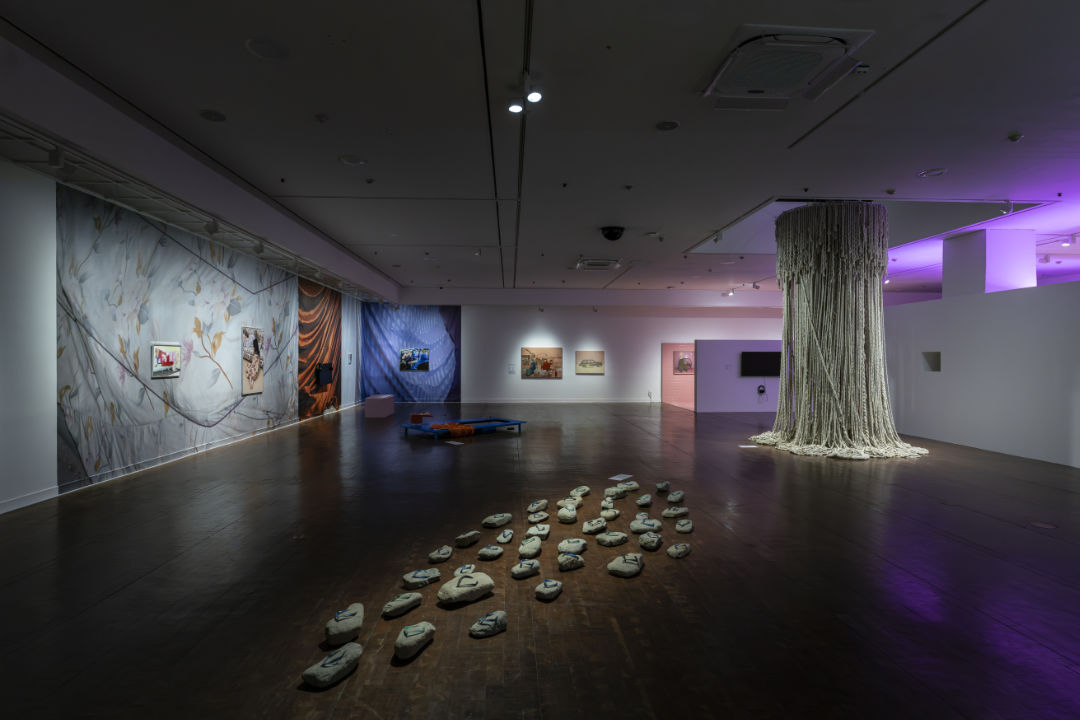
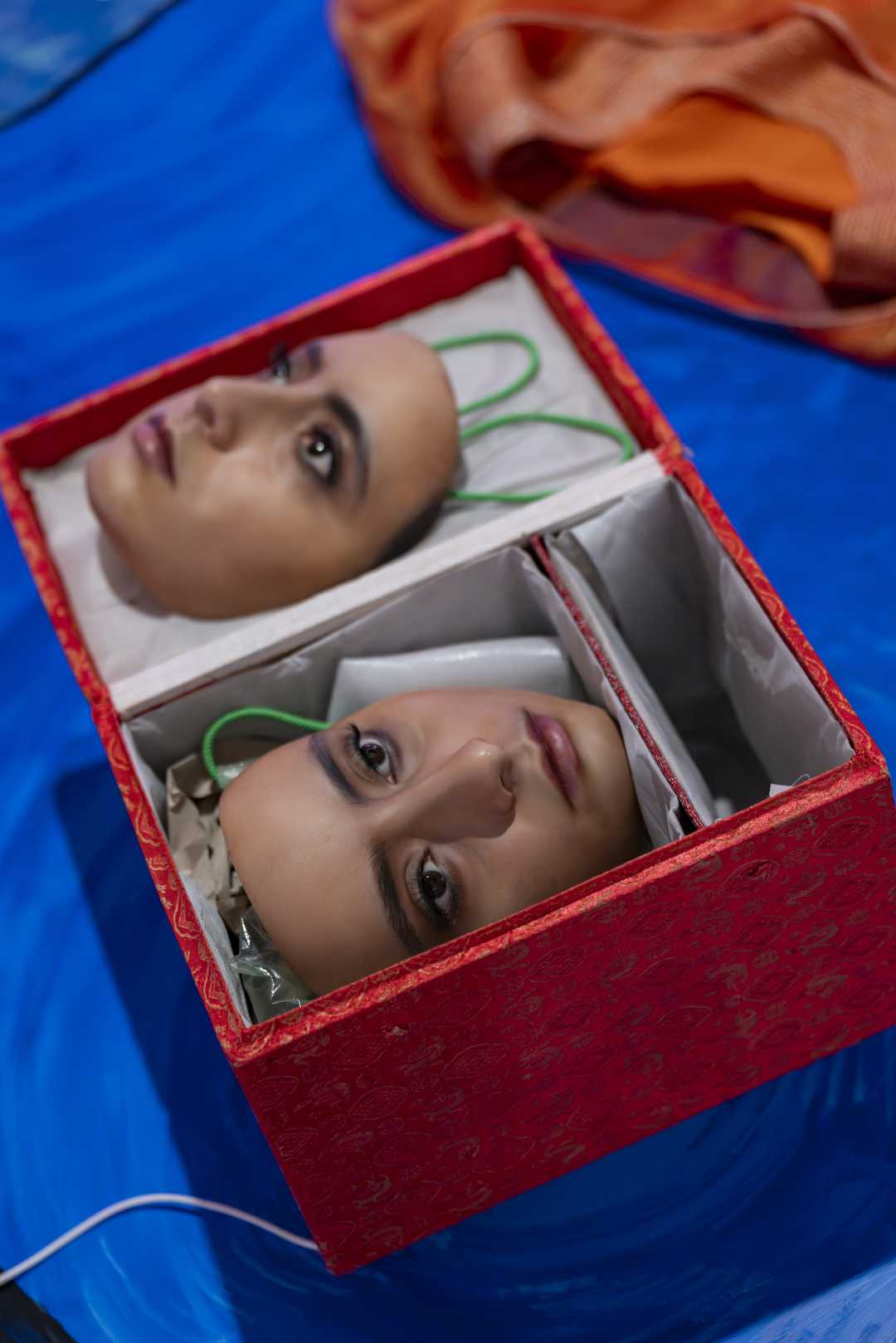
The exhibition, which ran from December 16, 2025, to March 29, 2026, opened with A Place for Turning, a section conceived with Farah Al Qasimi as guest artist-curator. Her stylised photographs, depicting domestic life in the UAE in the 1990s and early 2000s, were installed in the first gallery with their colour and detail covering the walls, highlighting the texture of their intimacy. Elsewhere, works extended this encounter with the interior: Maitha Abdalla’s absurd photographs were set within a soft pink tiled space that evoked the inside of a body. The tiles recalled a bathroom’s interior, but the enveloping colour and low light shifted the association toward something more visceral, more psychological.
Curated by Maya El Khalil and Eunju Kim, the exhibition began with the self – with “I.” From where else can we start to make sense of the world? It was also a decision to approach complexity, which can only be processed from somewhere familiar or something that feels like home. From there, transformation becomes possible, not as resolution, but as a way of moving through a fractured world.
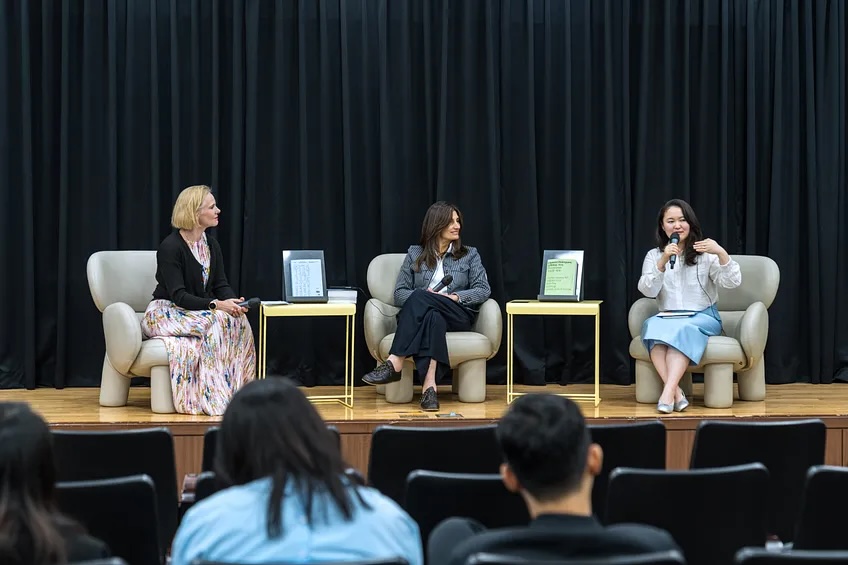
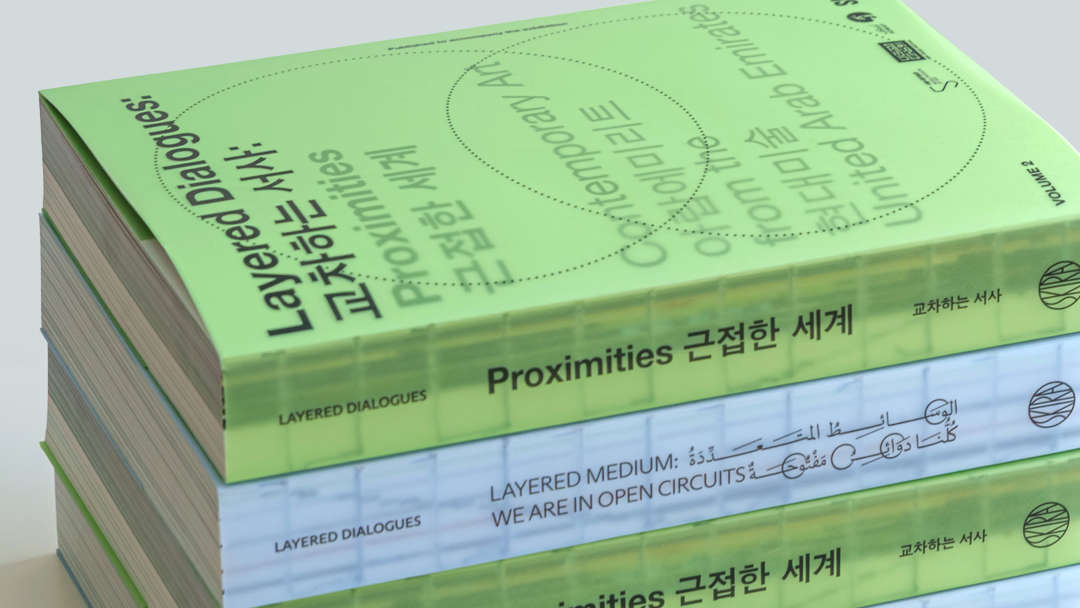
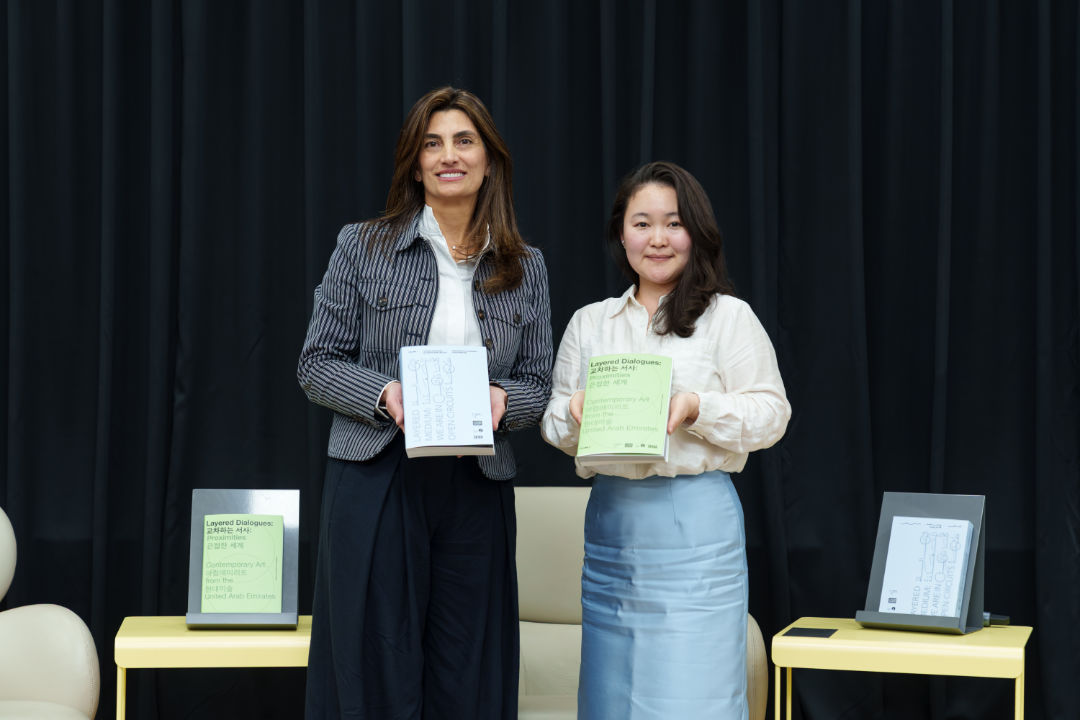
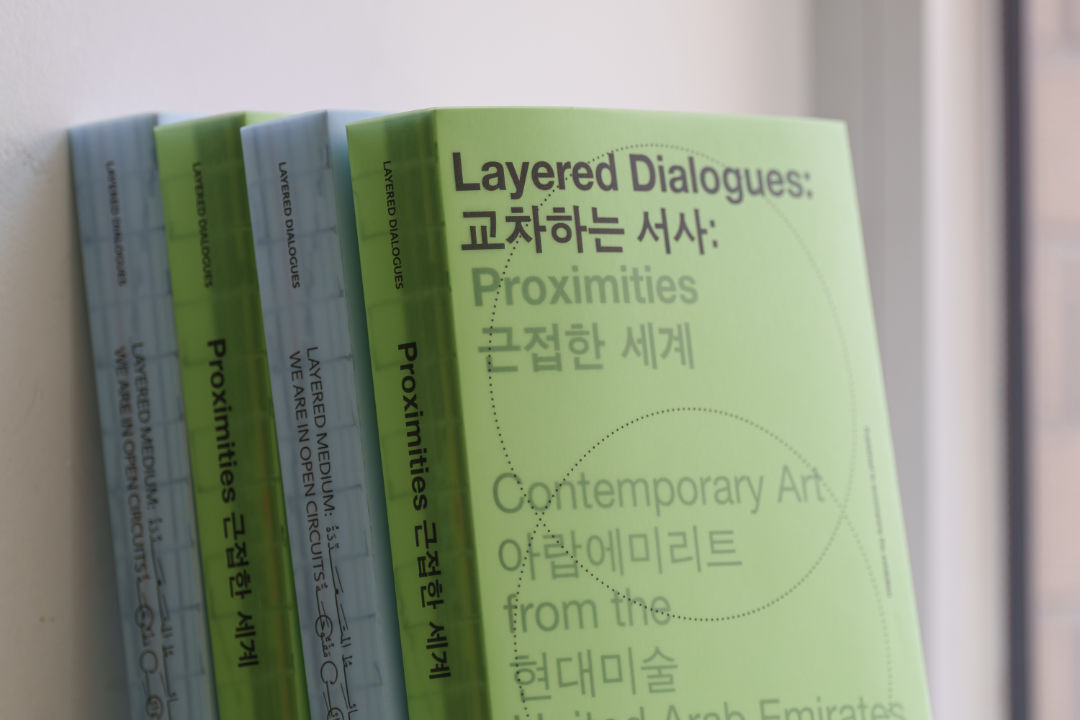
I visited during Proximities’ closing weekend, when I was invited by ADMAF to moderate a conversation between El Khalil and Kim, marking the launch of its publication. In my opening remarks, I returned to the word proximity, which usually suggests closeness but, in this framing, asked us to consider something else: not physical nearness, but whether the overlapping of people, ideas, and cultures might produce new forms of meaning.
This enquiry formed the backdrop to conversations both on and off stage. Despite being geographically distant from the escalating conflict in the Gulf, audiences in Korea were hardly insulated from the ongoing fallout of the US-instigated war on Iran. As the global tectonic plates of security continued to shift, a question emerged: when distance and time collapse through technology and the world appears to shrink, what happens to our understanding of it?

I initially set out to write this piece as a meditation on resilience, a kind of ‘the show must go on’ narrative, in which despite missiles, drones and closed airspaces, we converged in South Korea and carried on regardless. But that quickly felt hollow, even cliched. What emerged instead was a reflection on transformation – one embedded in that initial etymology and carried through the exhibition’s three sections and its accompanying publication. Rather than resolving complexity, the exhibition presented it, through multiple voices, allowing for contradiction, and creating space for processing.
To call on Maya El Khalil’s words from her curatorial essay, proximity can only exist in relation. Drawing on the French propre, derived from the same root, she reminds us that it also means “one’s own.” “Proximity, then, is a kind of familiarity: it is what is near to us and what we recognise as such, what we claim as adjacent to our experience, our vision, our understanding,” she writes.
As the exhibition progressed, viewers moved from that familiarity held in the domestic space towards a destabilisation of what we presume to be fixed. In Recording Distance, Not Topography, co-curated by Cristiana de Marchi and Mohammed Kazem, navigational tools such as maps and coordinates became loose and fluid.


Here we see Kazem’s Directions (Merging), in which GPS coordinates scored into the sand on a beach in Sharjah are being gradually erased by waves. Hazem Harb’s Fragmentation #1, a photographic collage constructed from a pre-1947 map of Palestine unfolds in a concertina pattern of layered repetitions. Borders and markings are stretched and staggered; unclear and uncertain. Set against the backdrop of Gaza’s ongoing decimation, the work felt pressingly urgent to me as I toured the exhibition in March 2026. As a viewer, I was suddenly and abruptly pulled into the present and asked: what does proximity mean in relation to conflict? Do we have the capacity to process the images of war circulate instantly and endlessly in a time-compressed lived existence? And I was brought again to El Khalil’s essay that states that whilst brought closer by technology, we must also be aware that that same closeness risks flattening what it represents. Distance collapses, but so too does depth.
what does proximity mean in relation to conflict? Do we have the capacity to process the images of war circulate instantly and endlessly in a time-compressed lived existence?
Eunju Kim picks up that thought in her curatorial essay, which states “geographic separation makes it difficult for changes in the region to enter the realm of everyday experience.” Through both curators then, we are reminded that proximity, just as truth, is a perspective that is never neutral. It is at once connective and distorting, intimate and estranging. It asks not simply how we come closer to the world, but how we remain open to being changed by what we encounter.

Nujoom Alghanem’s Passage is the final work in the second section. It is a work that underscores the duality of perspective by presenting a real and a fictional narrative on either side of a single screen that bisects the space, making it impossible to view both sides at once.
After this work, the tone of the exhibition shifted again moving into its third and final section, brought together by artist-curators Rokni Haerizadeh, Ramin Haerizadeh, and Hesam Rahmanian. This section titled That Thing, Amphibian considers a generation of artists practicing over the past five years who operate between institutional frameworks and independent practice, which is what the curators describe as an amphibious condition.

By highlighting the ability of these artists to inhabit two positions at once, the section embraces the multiplicity of perspectives that proximity can bring. The artist-curators articulate this further through the figure of the inner and outer square – the Chinese symbol 回 – which holds both containment and release. It also resonates with El Khalil’s writing that references Virginia Woolf’s The Waves to explain that the exhibition does not move in a straight line but in overlapping formations describing “people and their ways of knowing the world as a series of concentric circles radiating from multiple centres.” Each work becomes a point within this shifting constellation distinct, yet inseparable from what surrounds it.
To experience the exhibition in this way is to move between positions without fully settling into any one of them. And perhaps that is what feels most resonant now. To live in this moment is to occupy multiple, overlapping realities at once: to be physically distant from conflict and yet constantly exposed to it; to continue working, speaking, gathering, while elsewhere lives are being dismantled. Proximity was never something stable to begin with. It shifts depending on where we stand, what we see, and what we choose to look away from.

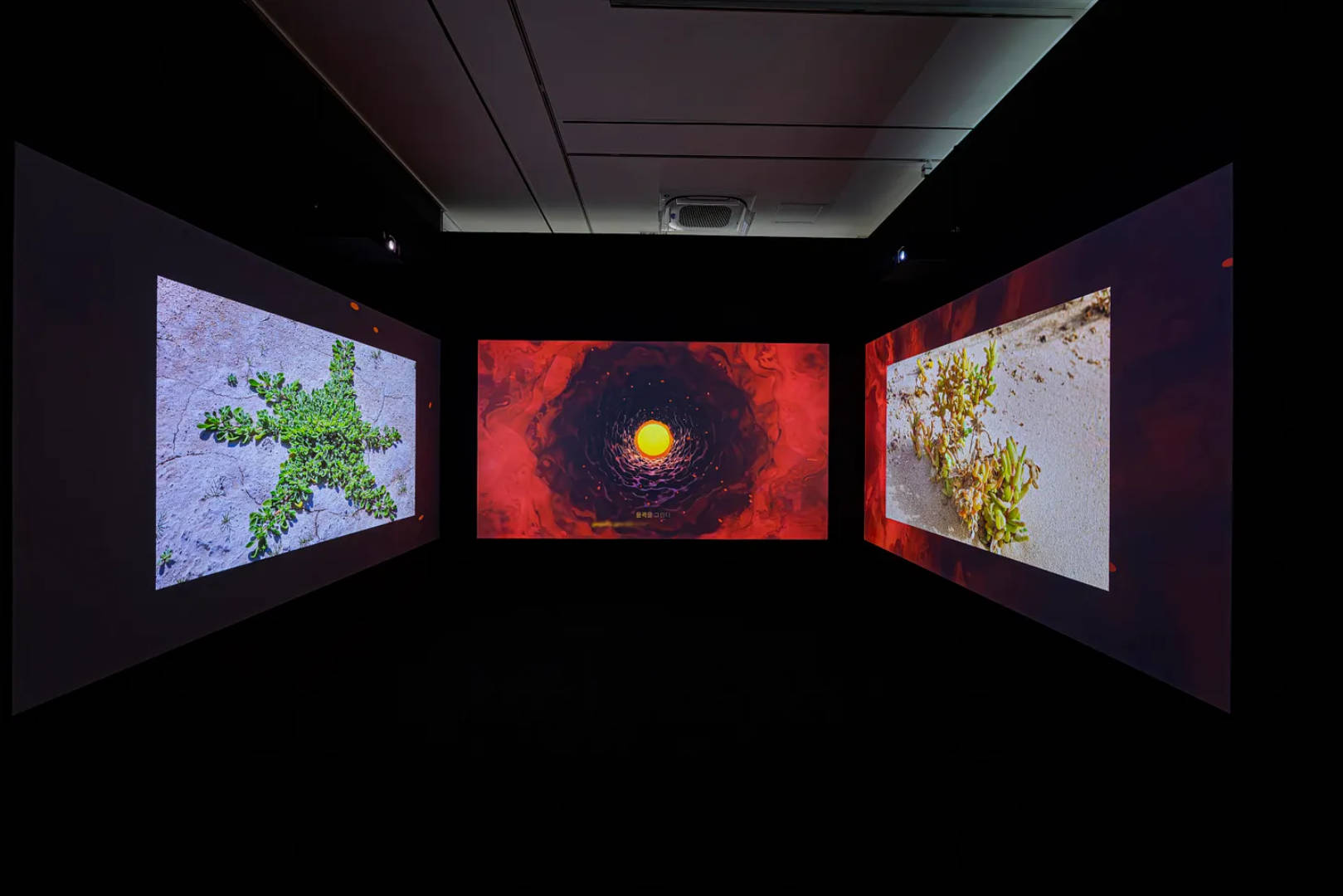
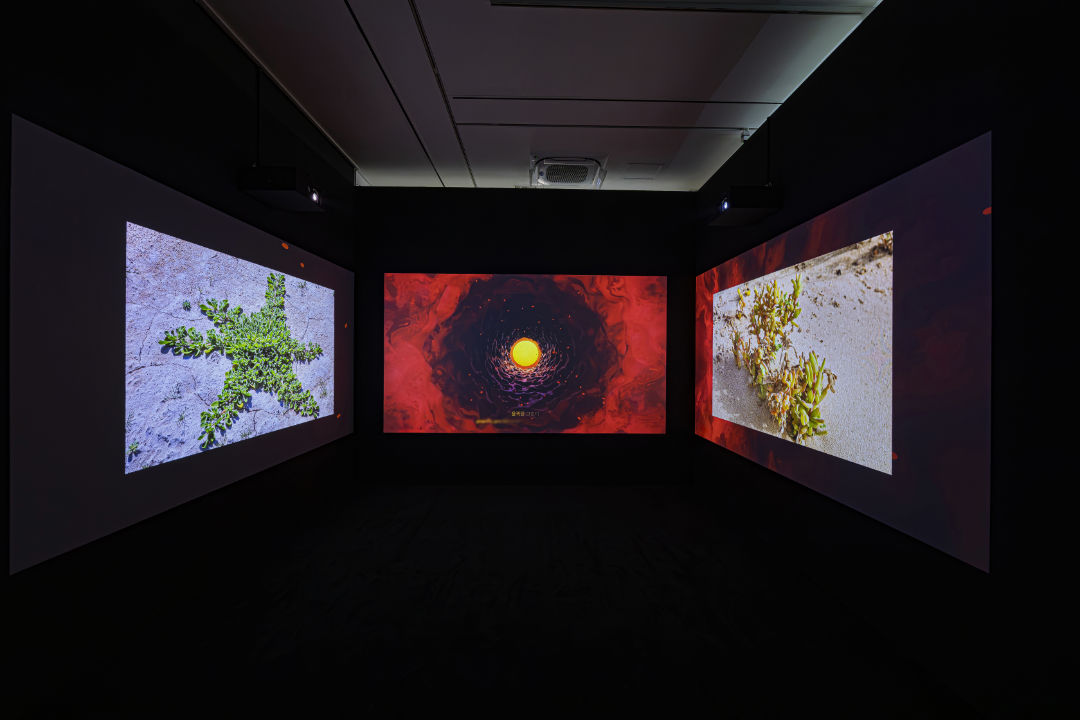
The final gesture of the exhibition, and one that stayed with me long after I left the museum halls of SeMA, was Ayman Zedani’s The Desert Keepers. This three channel video, commissioned by ADMAF, is a strikingly poetic narrative told from the point of view of a parasite named Cynomorium, which the artist describes as containing both an archive of the desert’s history and the keys to livable futures. Cynomorium is a real parastic organism that only survives by infiltrating and integrating into different plant hosts. Its very existence depends on other organisms; it survives only through proximity. That is what makes it such a wonderful way to end the exhibition. Here, proximity becomes a condition of survival, and a fitting metaphor for the way we live now: fragmented, stretched across multiple places, yet constantly connected through screens, time zones, and networks.
The desert setting brings this into sharper focus. As El Khalil noted, “in the desert, if you stop, you die.” That brought me back to the heart: if it stops, we die. Perhaps then it is in this constant movement – in the necessity of continuing, adapting, turning – that the possibility of transformation resides. Not as a singular event, but as an ongoing condition, held somewhere within the depths of a perpetually turning heart.
Anna Seaman is a Dubai-based Arts Editor and Consultant who served on the editorial team of Layered Dialogues and moderated the joint publications’ public programme at its launch.
Exhibition Views

Photo Credit: ADMAF


%2C%202021.jpg)
_Photo%20Credit%20ADMAF.jpg)
%20(1).jpg)

_Photo%20Credit%20ADMAF.jpg)
_Photo%20Credit%20ADMAF.jpg)
.jpg)

.jpg)


.jpg)


.png)